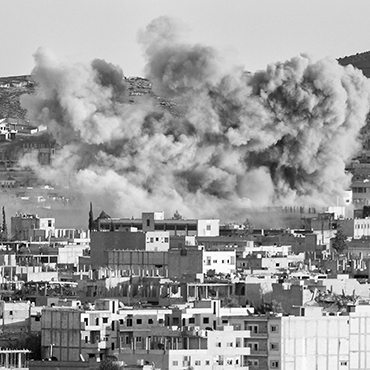
SYRIA'S TURMOIL DRAWS ALARM...
The collapse of Kurdish-led security arrangements in northeastern Syria has created a significant counterterrorism gap in the country. When Syrian government forces took over the al-Hol detention camp in January 2026, the transition was disorganized enough that a large portion of the facility's detainee population, including thousands of foreign nationals with ties to the Islamic State, escaped. An internal EU memo warned that militant groups could exploit this pool of displaced, potentially radicalized individuals for recruitment.
The broader concern is structural; Damascus appears to lack the capacity to manage these facilities effectively, and a second detainee camp at Roj faces similar risks once it changes hands. The situation reflects a wider pattern of counterterrorism infrastructure potentially becoming increasingly fragile as control over Syria's northeast shifts. (Reuters, February 24, 2026)
...AND REGIONAL NATIONS STRATEGIZE...
The strategic shift in Syria is having regional effects, as Middle Eastern and North African states attempt to grapple with a problem they have long ignored: foreign fighters. Morocco, for instance, is developing a formal plan to repatriate hundreds of its citizens who had joined the ISIS cause and are now in Iraqi detention. The situation stems from a recent U.S. decision to relocate thousands of ISIS prisoners out of Syria after the SDF collapse there – a step that has prompted the Iraqi government to urge foreign nations to take responsibility for their own nationals. The Moroccans in question include former fighters, as well as women and children connected to them – multiple groups that each require different legal and logistical considerations. While the Kingdom successfully repatriated a small group of fighters in 2019, who received lengthy prison sentences, the current numbers being considered by Rabat are far greater. (Reuters, March 12, 2026)
...AND ISIS REGROUPS IN AFRICA
UN officials, meanwhile, are raising the alarm over what they see as new signs of life on the part of the Islamic State writ large. In remarks to the Security Council last month, Alexander Zouev, the acting head of the UN's Office of Counter-Terrorism, warned that the group's influence was expanding – in particular in West Africa and the Sahel, where it is reportedly growing in sophistication and becoming harder to manage. According to Zouev, the group has shown a persistent ability to evolve despite ongoing counterterrorism efforts. Its strategy currently involves the continued absorption of foreign combatants and the integration of sophisticated, cutting-edge technologies. In particular, Zouev highlighted the growing influence of the Islamic State West Africa Province, or ISWAP, in the Lake Chad Basin. (Africa News, February 5, 2026)
CAIRO TAKES FRESH AIM AT THE MB
Here in the United States, the Trump administration has refocused on the Muslim Brotherhood in its second term, issuing an Executive Order last Fall calling for the designation of "certain chapters" of the transnational group as Foreign Terrorist Organizations and Specially Designated Global Terrorists. It followed through last month, when it formally designated the Brotherhood's branches in Egypt, Lebanon and Jordan to that effect.
Now, Cairo has picked up where Washington left off. The government of President Abdel Fatah al-Sisi has permanently blacklisted several senior Brotherhood figures under the country's Terrorist Entities Law. The list includes Mahmoud Ezzat Ibrahim, the group's former acting general guide, as well as senior organization figures Mahmoud Ezzat Ibrahim and Moaz Mansour El-Sharkawy. The latter two are already serving 15-year sentences handed down in 2022 on charges related to running an illegal organization and endangering national security. But the broader designation reflects a redoubled effort by Cairo to marginalize the Islamist movement, which has been officially outlawed in the country since 2013. (Middle East Monitor, March 17, 2026)
Want these sent to your inbox?
Subscribe
Global Islamism Monitor No. 139
Related Categories:
Intelligence and Counterintelligence; Islamic Extremism; Terrorism; Middle East; North Africa; United States; West Africa