Publications

Why Central Asia and the Caucasus Should Link Up and Why the World Should Stand Aside as They Do So

November 23, 2026 S. Frederick Starr

When the USSR collapsed, many did not expect the eight new states in former Soviet Central Asia and the Caucasus to survive, let alone to thrive. Inter-ethnic tensions, radical religious movements fanned by foreigners, the lack of many laws and institutions that modern life requires, and the hangover of habits formed under nearly two centuries of Russian colonial control all augured ill for the new countries...
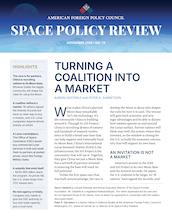
Turning a Coalition into a Market

November 19, 2026 Peter Garretson,  Aaron Oesterle American Foreign Policy Council

Unlike the first space race that was built around prestige, the race to develop the Moon is about who shapes the rules for how it is used. The winner will gain both economic and strategic advantages and be able to dictate how nations operate on and around the Lunar surface. Partner nations will likely stay with the system where they invested, so the window is closing for the U.S. to build the economic community that will support its own base.

America, China and the Competition for the Global South

November 16, 2026 Derek Grossman

Although U.S.-China competition is often viewed through the lens of a potential conflict over Taiwan or tensions in the South China Sea, Washington and Beijing are increasingly competing for influence across the breadth of the Global South. From Southeast Asia and South Asia to the Pacific Islands, Middle East, Africa, and Latin America, China has significantly expanded its economic and diplomatic presence, becoming a leading trading partner, infrastructure investor, and development partner for many countries.