Eurasia Security Watch: No. 149
Fatah resurgent?;
A traitor in the ranks;
A nuclear nightmare in the Caucasus;
Reinforcements of for Al-Qaeda;
A new vision of the Syrian military
Fatah resurgent?;
A traitor in the ranks;
A nuclear nightmare in the Caucasus;
Reinforcements of for Al-Qaeda;
A new vision of the Syrian military
Kazakhstan unviels new military strategy;
Hamas' fractured future;
Aliyev in the dock;
Abu Dhabi and the demographic of decline...
By now, the nearly two-week-long hostage crisis prompted by Iran's brazen seizure of 15 British sailors and marines in the Persian Gulf in late March is beginning to fade from public memory. But the incident has provided the West with an important glimpse into Iranian strategy - and an unprecedented opportunity for a reinvigorated transatlantic consensus about confronting the Islamic Republic. From the start, Iran's ayatollahs used the well-orchestrated seizure as a flagrant piece of political theater. The goal? To signal their regime's resolve in the deepening crisis over its nuclear program. The message - coming just days after the U.N. Security Council's passage of a second round of sanctions on Iran for its unauthorized nuclear work - was unmistakable: The Iranian regime is ready and willing to fight for its atomic effort.
Fatah braces for battle;
Saudi Arabia versus the internet;
Thinking twice about de-Ba'athification;
The domestic cost of Turkish counterterrorism...
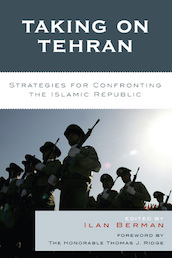
Taking on Tehran provides concrete solutions to the emerging Iranian global threat. With contributions from leading analysts and practitioners, Taking on Tehran examines the various approaches - economic, political and military - that can be taken by the United States and its allies to confront and defeat the contemporary challenge posed by the Islamic Republic.
Five-and-a-half years after September 11th, the United States finally appears to have acknowledged the necessity of effective intelligence to its national security in the 21st century. The Bush administration, inheritor of a deeply flawed institution at its inauguration, was forced to confront this reality after a string of intelligence failures and foreign policy setbacks that culminated in the Iraq war.
President Bush managed to harness momentum from the disaster of 9/11 to institute the most extensive overhaul of American intelligence in decades. Yet, in true Washington form, time, attention and effort is not necessarily an indicator of success. Indeed, the Bush administration’s victories have been too few and far between, and its agenda for reform too susceptible to stalling or reversal. Momentum toward transformation likewise has been tempered by competing political interests and the inertia of Congress. The resulting track record has been mixed; the task incomplete.
What a difference a few years can make. In September 2002, less than a year after taking office, the Bush administration laid out a breathtakingly ambitious vision of American foreign policy. “The United States possesses unprecedented—and unequaled—strength and influence in the world,” the newly-released National Security Strategy of the United States proudly proclaimed. “Sustained by faith in the principles of liberty, and the value of a free society, this position comes with unparalleled responsibilities, obligations, and opportunity. The great strength of this nation must be used to promote a balance of power that favors freedom.” But less than five years later, that vision appears to be in full strategic retreat.
While there is still hope that Iran will not develop nuclear weapons, it is becoming more likely that a nucleararmed Iran will become a reality in the near future. It therefore is useful to begin looking at strategic models for managing the threat of nuclear weapons if Iran actually develops them, and to consider exactly what risks the civilized world would be facing.
Setting priorities for space;
In Russia, mounting opposition to U.S. missile defense...;
...and more military modernization;
Cutting off Chavez
A straggler in the PSI;
Jitters over China's space ambitions;
Romania takes itself off the table;
Palestinian missile threat expands...;
...prompting a new focus on technology in Israel;
U.S.-Japanese cooperation gathers momentum
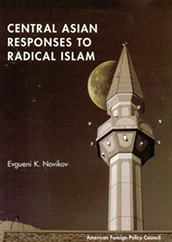
Central Asian Responses to Radical Islam is a groundbreaking first-person assessment of the ideological struggle currently taking place in Central Asia between local government and the forces of radical Islam.
Russia's shifting nuclear strategy;
A bumpy road for the "
Bulava"
Iran's newest export;
France's new firepower
Gaming North Korea's next move;
Tokyo mulls its strategic options;
Tentative U.S. steps toward space...;
...amid inertia in Europe;
An ultimatum from Moscow;
Missile defense momentum in
Ripples from North Korea's nuclear test;
Another setback for space-based defense;
A new calculus in Ottawa;
Second thoughts in Prague
Back on the global agenda;
Seoul gets serious;
Tokyo poised to deploy PAC-3;
Poland in the crosshairs;
New missile defense momentum in Israel
Chinese space warfare threat grows...;
...as India looks to the stars;
Japanese radar comes online;
Fear and loathing in Moscow;
Russia's aging strategic arsenal
Out of step on missile defense;
Tweaking the strategic triad;
Planning for the worst in Seoul;
Pyongyang changes proliferation tacks
The U.S.-Australia alliance is one of the cornerstones of American regional security strategy in East Asia. Years of work by successive administrations in Washington and Canberra have forged both trust and synergy in the two nations’ strategic objectives. Of course, no two countries share identical interests. But perhaps more then any other bilateral relationship in East Asia, America’s partnership with Australia is rooted in common values and a common vision for the region.
Back to Britain;
A new focus for U.S.-Israeli missile defense ties;
Closing the gaps in cruise missile defense;
The logic behind China's missile efforts;
North Korea's mounting missile threat...;
...and
Missile defense progress in Prague...;
...and new inroads in Italy...;
...rattle Russia;
In Beijing, an emerging space strategy;
Taking stock in Seoul
Ripples from North Korea's missile tests...;
...as Pyongyang's strategic partner looks on;
Taiwan takes on the Mainland;
Iran's ballistic missile strategy
Nearly five years after September 11, it is fair to say that the U.S. government remains challenged by how to combat the ideology of radical Islamists. In some ways, this is not surprising. The West now faces a challenge in an area - religious controversy - which the modern state prefers to leave to individual discretion, and in which it is not accustomed to contend. Moreover, the struggle is taking place within a largely unfamiliar religion, in an area in which the West is, at best, tone-deaf. Nevertheless, this new “war of ideas” must be joined and won if the United States is to address what have become grave threats to its security.
China's space ambitions;
A new generation of Arrow takes off;
Missile jitters hit Capitol Hill;
Russia ramps up work on radars;
Russia versus American space strategy
Who is Mahmoud Ahmadinejad? Before his meteoric rise to power in the summer of 2005, Iran’s ultra-conservative president was a relative political unknown. Since taking office in August 2005, however, the 50-year-old Ahmadinejad has done much to demonstrate his radical credentials. He has ratcheted up the Islamic Republic’s hostile rhetoric toward Israel and the United States. His government has systematically rolled back domestic freedoms and deepened its control over Iranian society. And, under his direction, the Islamic Republic has accelerated its very public march toward an atomic capability.
China's evolving strategic arsenal;
Tokyo eyes North Korean missile moves;
Escalating missile tensions between Iran and Israel;
Defending Europe from Iran...;
...creates ripples in Russia
Changing course in Canada;
A helping hand from Pyongyang;
European basing faces the Congressional axe;
In Israel, a changing missile defense focus;
More missile moves from Moscow
New movement in "
New Europe"
The Kremlin's strategic calculus;
The space imperative;
Asia's changing missile focus
Missile defense makes progress... in China;
Iran's burgeoning missile arsenal;
Baby steps toward space...;
...and new urgency for cruise missile defense;
Breathing room for the ABL
New challenges from Russia;
Tehran's accelerating ballistic missile program;
A tenuous balance in the Taiwan Strait;
North Korea comes back into focus
Getting serious about space security;
Turkey: back on the table;
X marks the spot;
Syria's missile strides;
Re-engaging Canada?
Indo-Israeli cooperation moves forward;
The push for Asian defense;
Closing the book on the MTHEL;
Refining the Shahab-3;
Tokyo, Washington move closer on missile data;
New missile claims from Moscow
Iran's WMD quest;
Tokyo plans sea-based defenses;
New missile defense momentum in NATO;
The sun sets on SBIRS;
Deterrence, Taiwanese style
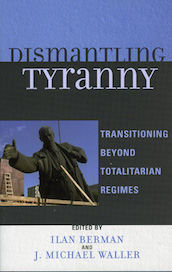
Dismantling Tyranny is the first significant study of how new democracies handled the legacy of the secret police of the previous totalitarian regimes. It contains chapters that study the cases of the Czech Republic, Estonia, the former East Germany, Lithuania, Nicaragua, Poland and Russia.
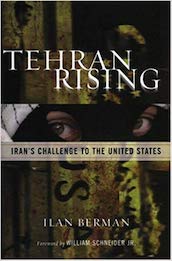
Today, Iran constitutes the single greatest challenge to the United States and the War on Terror. In the Persian Gulf and Central Asia, Iranian policymakers are busy cobbling together alliances intended to marginalize the United States and its Coalition allies.
This spring, practically unnoticed by the mainstream media, the battle lines were formally drawn in the “war of ideas.” President George W. Bush used his January 2005 inaugural address to deliver an unapologetic tribute to freedom and the premises that undergird Western liberalism: liberty, the individual, and self-government.In response, Jordanian terrorist Abu Musab al-Zarqawi, Osama Bin Laden’s chief lieutenant in Iraq, released an audiotape of his own. In it, he denounced the very principles President Bush has pledged to promote.This frank exchange should serve as a useful primer for all of those who believe that the War on Terror is at its core a struggle against global privation, or a cross-cultural misunderstanding that can be settled by a search for common ground. Quite the opposite is true. We are engaged in an ideological conflict that resists compromise.
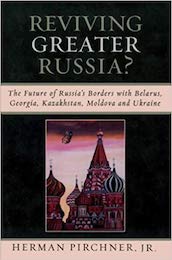
In December 2001, a new Russian law laying the basis for the peaceful territorial expansion of the Russian Federation went into effect. The entire country of Belarus-as well as parts of Georgia, Kazakhstan, and Ukraine-are the most likely candidates to join Russia.
The vast majority of Muslims word-wide are peaceable, law-abiding and hospitable people. Nevertheless, the West's reaction to atrocities such as 9/11 and 7/7, and the lack of a coherent understanding of our adversaries, is threatening relations with all Muslims.
The battle for Iraq may still be far from over, but its impact is already sending shockwaves throughout the Middle East. Militarily, Washington's early successes have put to rest any lingering doubts about U.S. capabilities or American resolve. But more significant still is the example set by Iraq's impending liberation, and the accompanying realization that is taking root in the region — that Baghdad's fall could foreshadow even greater change.
A silver lining in the trans-Atlantic storm clouds over Iraq is the damage done to NATO. This costly foreign entanglement was long overdue for a body blow. NATO was not intended, by Americans at least, to be a permanent commitment, but an interim measure while Western Europe recovered from the War. When the first Supreme Allied Commander, Dwight Eisenhower, obtained congressional consent to station U.S. divisions in Europe, he promised and believed they would be there only a few years. But, like Marx's "withering away of the state," Europe proved resilient in allowing America to shoulder Europe's burden long after its prosperity dwarfed the laggard socialist economies and even after the Soviet collapse. The European Union today integrates everything except defense, lest it make too obvious that Europe is more than able to look after itself.
Even as it girds for war in the Persian Gulf, the Bush Administration faces a major challenge in East Asia – that of a nuclear North Korea. The conflict emerged quite suddenly. Back in October, Pyongyang stunned the White House with its unexpected admission of an active clandestine nuclear program. The disclosure was followed, in rapid succession, by the DPRK’s December decision to restart its Yongbyon nuclear facility and expel International Atomic Energy Agency inspectors. A month later, North Korea abruptly withdrew from the 1968 Nuclear Nonproliferation Treaty and rolled back its self-imposed 1999 moratorium on missile testing. Together, these moves have presented Washington with an unprecedented – and escalating – problem on the Korean Peninsula.
What a difference a year makes. Twelve months ago, the coalition government of Bulent Ecevit in Turkey had risen to the forefront of U.S. regional allies in the Middle East, contributing heavily to America's Afghan campaign. Today, Washington is deadlocked with Ankara, now led by the Justice and Development Party (AKP), over the next phase in its war on terrorism: military action against Iraq.