Russia Policy Monitor No. 2714
Russia's disposable foreign legion...;
...And dishonest recruitment tactics;
Preparing for the end of Kadyrov;
The state reaches into Russia's schools;
Rebuilding ties with the new Syria
Russia's disposable foreign legion...;
...And dishonest recruitment tactics;
Preparing for the end of Kadyrov;
The state reaches into Russia's schools;
Rebuilding ties with the new Syria
Top general under investigation for "grave violations";
China expands power generation for AI;
China "shot itself in the foot" with the One Child Policy;
Peru's president had secret meetings with Chinese businessmen;
China buys more Indian goods, but large trade deficits persist
Today’s internet blackout in Iran, in other words, is merely the most visible manifestation of an accelerating information arms race. Iran’s radical regime is racing to consolidate digital control over its captive population. If it succeeds in doing so, Iran’s brave protesters will find themselves truly cut off from the outside world.
Despite many US inducements, Crown Prince Mohammed bin Salman has turned away from normalization with Israel and broader US alignment in the Middle East.
Russia's shadow still falls over Venezuela;
Russia reemerges in Syria;
Spy nuns in Sweden;
Airline shortages and old aircraft
PRC reports largest ever trade surplus;
Chinese, Canadian leaders ink deals, slash tariffs;
State TV airs PLA "decapitation" strike drill on Taiwan;
China debuts "Drone Killer" weapons system;
China's East China Sea gas exploration fuels tensions with Japan
Canadian and European political leaders of various stripes seem to be tripping over themselves to articulate a sensible position on the escalating conflict between NATO allies over Greenland, a Danish colonial possession until 1953 that is now an autonomous territory of the Kingdom of Denmark, and a territory the United States now seeks. However, this collective incoherence does nothing to reduce tensions, much less help overcome the danger we all face. As a Canadian, I propose an outside-the-box compromise solution that puts Canada First.
Big changes are afoot in Eurasia. Over the past several months, the region has undergone a series of tectonic shifts, as countries in Central Asia and the South Caucasus have recalibrated their respective foreign policies and expanded ties with the West.
Beijing will pay $26B in pregnancy and childcare subsidies in 2026;
China, Russia, Iran hold naval drills in South Africa;
China's influence will grow, as trust in U.S. fades -- New poll;
Navy sailor gets 16 years for selling classified material to China;
Beijing installs loyalist to lead AIIB
Putin builds a new palace;
Russian energy continues to fuel Europe;
The targeting of Russia's military elite;
Ongoing questions about Kadyrov's health;
Russia's shadow fleet seeks new protections
To make sense of how Gamsakhurdia engaged with Georgian Christian mysticism, I organize his sources into two analytical categories—what I term the “Gelati current” and the “prophetic current.” These are, crucially, not divisions that Gamsakhurdia himself articulated, but rather, groupings that help illuminate the different functions these sources served in his thinking.
This piece is the second in a three-part series on the esoteric sources of Zviad Gamsakhurdia’s worldview. The first piece introduces the series and provides theoretical and historical context for its material and claims. This piece focuses on anthroposophy. The third piece will focus on Georgian Christian mysticism.
In these pieces, I begin (but certainly do not finish) the process of undertaking that engagement by tracing and examining the esoteric sources that shaped Gamsakhurdia’s worldview. To Gamsakhurdia, Georgia was not just a newly independent state among many newly independent states, but the bearer of an ancient history and a future mission of great significance. It was a chosen mediator between—and synthesizer of—worlds: Western and Eastern, earthly and divine.
A major loss of confidence...;
...And a problematic sector...;
...Fans worries in Europe;
Russia seizes on the corruption narrative...;
...As heads roll in Kyiv;
But at the end, Zelinsky's popularity rebounds;
Russia plans long-term nuclear investments;
More recruitment of ethnic minorities on the horizon;
Putin declares a holy war;
A Russian conspiracy discovered in Kyiv...;
...And another on the border with Norway
Shortly after space week in October, investment firm JP Morgan announced a $10 billion investment plan targeting industries critical for United States national security. In addition to things like nanomaterials, autonomous robotics and solar power, the announcement also focused on funding spacecraft and space launches.
President Donald Trump has been busy on the world stage of late—toppling Venezuela’s Nicolas Maduro in a precision strike by U.S. forces, warning Tehran not to turn its guns on Iran’s protestors, and pushing for Russia-Ukraine peace.
Despite a lack of organization and vision for the future, the protests rocking Iran signal that the Islamic Republic is running out of time.
The new Executive Order on “ensuring space superiority” issued by President Trump is a milestone.
Yet another Russian General assassinated;
Russia's anti-Ukrainian lawfare;
Putin calls up reservists to protect infrastructure;
Russia's military continues to abuse its own soldiers
Wang Yi hosts Thai and Cambodian FMs for talks in Yunnan;
Russia vows to support China if it attacks Taiwan;
Beijing sanctions U.S. defense firms, seizes "non-existent" assets;
China proposes strict new rules to curb AI companion addiction;
Revised civil aviation law covers the "low altitude economy"
When it comes to a nation's potential, few factors matter more than demographics. The pace of a country's population determines a great many things, from the vibrancy of its society to its global competitiveness.
Understanding Russia’s Global War
The Informational Front in Russia’s War
Supply Chains and Security: Lessons from the Ukrainian Front
Ukraine and the Making of a Defense Innovation Industry
Understanding NATO’s New Mission
Just how widespread is domestic support for Russia's war on Ukraine, really?
The EU strikes back...sort of;
A return to the Russian Empire as Cossacks fight in Ukraine;
Russia's massive war spending;
Europe's plan B
The peripheral, energy-rich areas of Russia are bearing the brunt of the human and economic costs of the Ukraine War.
Trump Route for International Peace and Prosperity will link Turkey and the West
Syria and the potential for instability
Algorithm-driven radicalization;
The morality police come to Chechnya;
Ra'am's murky furniture
U.S. approves $11 billion Taiwan arms package;
House Committee issues recs to deter China from attacking Taiwan;
China supports Venezuela amid U.S. pressure;
U.S. and China boost counternarcotics cooperation;
Chinese firms move to Singapore to avoid U.S. tariffs
The continued push for a Kremlin-backed messaging app;
Hamas hearts Al-Jazeera...
...As the BBC's bias is exposed;
Australia tightens social media guidelines;
U.S. army focuses on disinformation
The Ukraine war's criminal veterans;
Russia's unguided hybrid war;
No love lost in Russia;
MI6 warns the west
U.S. special forces seize Chinese military cargo bound for Iran;
Man pleads guilty to smuggling $160 million in AI chips to China;
PLA fighters lock radar on Japanese jets;
Chinese and Russian bombers hold joint drills near Japan;
China's $1T surplus prompts criticism...
... And levies from Mexico, Europe
The tense clash in opinions over Bagram has left Central Asian countries, Afghanistan’s northern neighbors, in a complex position. The five states initially hinted at opposition to Trump’s efforts, shown in a joint statement of the Moscow Format of Consultations on Afghanistan.
Hong Kong Tai Po fires spur CCP resentment;
Mongolia seeks economic acceleration through expanded rail links;
China-Japan tensions deepen;
Pakistan and China launch joint counterterrorsim exercise;
Taiwan gains U.S. reassurance
Yet the real challenge facing Kinmen isn’t military—it’s a matter of political economy. Administratively tied to Taiwan, Kinmen illustrates the complex dynamics of geopolitical influence and economic integration.
Russia's intelligence failures in Ukraine;
Medvedev: EU loan would be a casus belli;
Moscow's tank plans;
An insider's look at Russia's military disarray;
Russia's mercenaries visit horrors on Africa
A Coast Guard standoff between disputed islands;
Amid demographic crisis, China starts taxing birth control;
China delays publishing home sales data;
China cancels Japanese music acts amid frosty ties;
Russia sells Yuan-dominated bonds
The United States faces a fundamental organizational crisis in space. America’s space enterprise remains fragmented across multiple agencies with unclear roles, overlapping responsibilities, and competing authorities. This institutional confusion undermines national security, stifles commercial innovation, and threatens U.S. leadership in the vital space domain.
Almost four years into Russia’s war in Ukraine, and more than a decade after Russia’s annexation of Crimea, the U.S. is faced with a dilemma. On the one hand is the urge to continue to support Ukraine diplomatically and militarily. On the other is the push to stop a war that neither side can win.
In October 2025, the Organization of Turkic States (OTS) convened a pivotal summit in Gabala, Azerbaijan, demonstrating its emergence as a significant geopolitical entity on the Eurasian landscape.
Late last week, without public fanfare, the Trump administration released its long-awaited National Security Strategy.
The campaign against Navalny's work continues;
Russia betrays its soldiers;
Putin distances himself from Maduro;
A new naval base in Sudan;
Moscow, Riyadh establish visa-free regime
China is no longer focused only on low-Earth orbit. Beijing now treats the Moon as strategic terrain, pushing toward a permanent base by the mid-2030s and space dominance by 2045
Military readiness isn't simply about money. It also depends on mobility. Put another way, even if it is produced in greater quantities than before, European battlefield equipment won't do the Ukrainians—or anyone else—much good if it can't be transported to the frontlines.
An eye on Svalbard;
Moscow levels a new tech tax;
Still no drone defense in Europe;
Russian subversion targets Ukrainian teens
As the Gaza war comes to a fragile (and possibly temporary) end, it’s prudent to take stock of the geostrategic environment Israel will have to face in the foreseeable future.
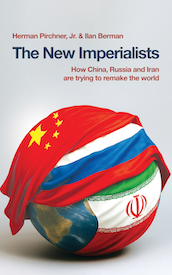
Today, a new axis of autocrats is trying to reshape the world order and sideline the United States in international affairs.
History rarely announces its turning points. More often, we wake up to find that the world we assumed was fixed has begun to shift beneath our feet. That is happening now.
U.S. restricts visas for Central Americans with PRC ties;
Huawei, ZTE seal 5G deals with Vietnam amid U.S. tariffs;
Taipei announces $40 billion budget for "Taiwan Dome";
PBOC expands crackdown on cyber currencies;
China is closing the military power gap
China has emerged as America’s primary geopolitical, economic, and military rival, rapidly building a modern industrial base tightly aligned with its strategic ambitions. The United States, by contrast, now depends on overseas suppliers for key components and resources essential to its defense industrial base.